
The Supreme Court has stayed a recent University Grants Commission (UGC) regulation following petitions arguing that the Commission's definition of caste-based discrimination was too narrow, excluding certain categories from institutional protection.

The Supreme Court has framed key legal questions regarding the University Grants Commission's equity regulations and stayed the implementation of the framework on caste-based discrimination in higher education institutions.

The University Grants Commission's (UGC) new regulations on promoting equity in higher education institutions have sparked protests and legal challenges. This article explains the regulations, the concerns raised, and the government's response.

Delhi University has directed St Stephen's College to halt the absorption of former principal John Varghese into the English department, citing violations of UGC regulations and procedural errors.
Delhi University has instructed St Stephen's College to halt the appointment of a new principal, citing that the selection committee was not formed in accordance with the University Grants Commission (UGC) Regulations, 2018.

The Supreme Court's stay on the UGC equity regulations aimed at preventing caste-based discrimination on campuses has been met with mixed reactions. Opposition parties welcomed the decision, while some expressed concern over the implications for marginalized communities.
St Stephen's College has appointed Susan Elias as its 14th principal, despite objections from Delhi University (DU) regarding alleged violations of University Grants Commission (UGC) regulations. Elias is the first woman to hold the position in the college's 145-year history.
St Stephen's College has scheduled the commissioning and installation service of its newly appointed principal, Susan Elias, despite an ongoing dispute with Delhi University over alleged non-compliance with UGC regulations.

The new UGC regulations mandating all higher education institutions to form "equity committees" to look into discrimination complaints and promote equity were notified on January 13.
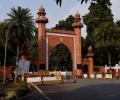
Will the Draft UGC Regulations 2025 undermine our universities? Unlikely, notes Professor Mohammad Sajjad, citing how AMU has utilised its exceptional autonomy.
Susan Elias has taken charge as the new principal of St. Stephen's College despite objections from Delhi University, marking a new chapter in the ongoing dispute between the college and the university.
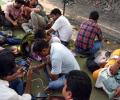
St Stephen's College is embroiled in a dispute with Delhi University over teacher recruitment, with a court order halting the process and a fresh examination roster including newly recruited teachers.

A plea has been filed in the Supreme Court challenging a University Grants Commission (UGC) regulation, alleging it has a non-inclusionary definition of caste-based discrimination and excludes certain categories from institutional protection.
'Once the actual scope is understood, it becomes evident that the framework is about internal redress and course correction, and in no way criminalisation.'
A 2008 court judgment has brought renewed focus on the provisions given to minority institutions in choosing their heads, amid a fresh tussle between Delhi University and St Stephen's College over the appointment of the college principal.

A student in Bahraich, Uttar Pradesh, was allegedly assaulted after protesting against the UGC Bill. Police have registered a case and are investigating the incident.

Alankar Agnihotri, a 2019-batch Provincial Civil Service officer, resigned from service citing deep disagreement with government policies, especially the new UGC regulations.

'What has changed is that the new regulations are backed by a clear enforcement framework. They have real consequences and, for the first time, make compliance unavoidable.'

A YouTuber claims she was assaulted at a Delhi University protest, sparking controversy as a student group refutes the allegations, leading to police investigation and calls for social harmony.

Alankar Agnihotri said several organisations of the upper-caste community would participate in the stir if the central government fails to withdraw the SC/ST Act by February 6.

Union Education Minister Dharmendra Pradhan has criticised West Bengal Chief Minister Mamata Banerjee, alleging that her leadership has led to the weakening of the state's institutions. The remarks follow Banerjee's criticism of Prime Minister Narendra Modi's comments on Jadavpur University.
Meanwhile, the Uttar Pradesh government has suspended Bareilly City Magistrate Alankar Agnihotri on charges of indiscipline after he resigned from service in protest against government policies.

As outrage mounted over the death of a 19-year-old Dalit student, the Himachal Pradesh government on Saturday suspended an assistant professor booked on charges of sexually harassing her and announced an inquiry into allegations, including those of ragging and cast related abuse of the victim, while the University Grants Commission also set up a fact-finding committee.

'It interferes in administrative matters of institutions, robbing them of their independence in day-to-day affairs and appointments.'

UGC pulls up IITs, IIMs, NITs, AMU and 86 others for failing to submit anti-ragging compliance -- exposing serious gaps in campus vigilance.

The government has intensified its Study in India programme and is working closely with universities and states to achieve this goal.

The scholarships are expected to support both merit- and need-based categories, including students from non-metro regions and those enrolling in high-demand disciplines such as AI and other STEM fields.

The outreach comes amid a drop in Indian student enrolments in management programmes at American universities last year, following changes to US student visa policies.

...surpassing farmer suicides (11,000) in number. There is a 4 per cent annual increase in student suicides, double the national suicide rate (2 per cent).

The panel was constituted after a 20-year-old Nepalese student of the Kalinga Institute of Industrial Technology (KIIT) in Odisha's Bhubaneswar was found hanging from the ceiling fan of her hostel room.
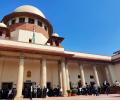
The Supreme Court on Friday quashed the appointment of the vice chancellor of APJ Abdul Kalam Technological University in Thiruvananthapuram, terming it bad in law and contrary to UGC regulations.

Ravi's move, the first after the meeting between Stalin and him following a recent suggestion of the Supreme Court to resolve their differences, came with a rider.

A bench of Justices AS Bopanna and MM Sundresh asked the UGC to furnish the details of steps taken on a plea by the mothers of Rohith Vemula and Payal Tadvi.

The Supreme Court of India has announced its intention to establish an effective mechanism to address caste-based discrimination in educational institutions throughout the country. The court directed the University Grants Commission (UGC) to draft regulations to prevent such discrimination and to provide data on institutions that have implemented equal opportunity cells as mandated by the 2012 UGC equity regulations. The court's decision stems from a public interest litigation filed in 2019 highlighting the prevalence of caste-based discrimination in higher education institutions and its tragic consequences, including the suicides of students like Rohith Vemula and Payal Tadvi.

Ranade was earlier removed from the position on September 14 by the then chancellor Bibek Debroy, after a fact-finding committee concluded that his appointment as the GIPE's VC did not conform to the UGC regulations on minimum qualifications for the appointment of teachers and other academic staff.
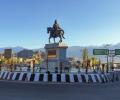
Terming the charge that Wangchuk incited the violence in Leh as 'misplaced', she claimed that he has been protesting in the "most Gandhian way possible" and the "situation escalated" on September 24 due to the actions of the CRPF.

'In the real world, it's not about being the smartest person in the room -- it's about being the one who stays grounded, adaptable and emotionally steady when everything else shakes,' says Ankita Kaul, a National Board certified health and wellness coach from the Dr Sears Wellness Institute.

The Supreme Court of India has assured the creation of a robust mechanism to address the alarming number of suicides occurring in Indian Institutes of Technology (IITs) and Indian Institutes of Management (IIMs). The court was informed that 18 suicides had taken place in these institutions over the past 14 months. The court has also directed the University Grants Commission (UGC) to finalize draft regulations aimed at combating caste-based discrimination in educational institutions.

Initially, we will look to take a small batch of a few hundred students, with a plan to increase this to 5,000 students in the next five years, and eventually 10,000 by 2036.'
The nine VCs include that of the APJ Abdul Kalam Technological University, according to a tweet by Kerala Raj Bhavan on behalf of the Governor.
